राष्ट्रिय
Sikkim’s Electoral Roll Shows Decline in Gender Ratio, Raising Concern
Bishnu Neopaney
२०८३ श्रावण २४, शनिबार
१०:१५ बजे | अद्यावधिक: १०:४५
439 पटक हेरिएको
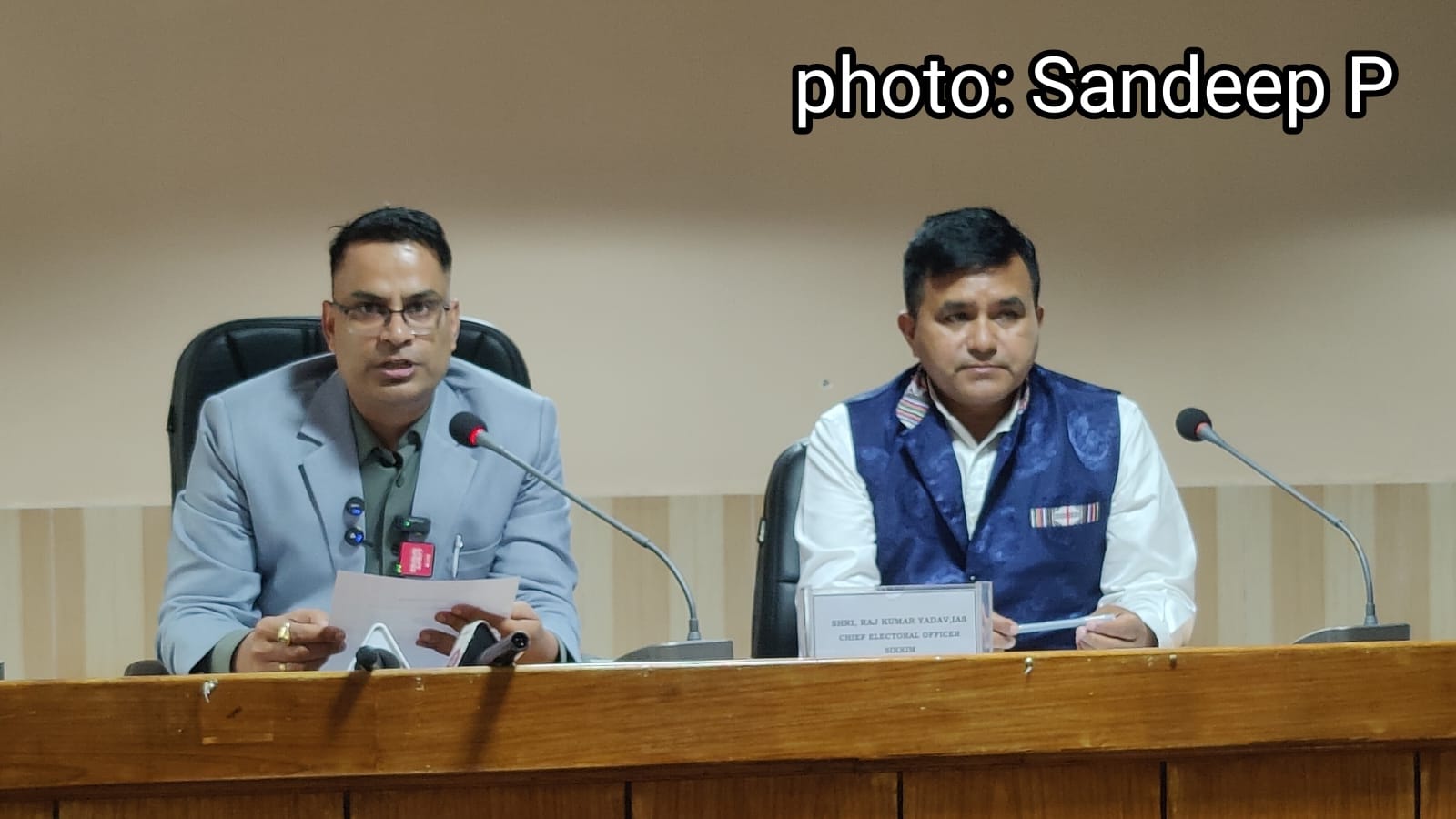
GANGTOK, Sept 7: The gender composition of Sikkim’s electorate has emerged as a matter of concern following the publication of the Final Electoral Roll under the Special Intensive Revision (SIR) 2026, with the female-to-male voter ratio declining to 969 women for every 1,000 male voters.
According to the figures shared by Raj Kumar Yadav, Chief Electoral Officer, Sikkim the final electoral roll has 4,18,467 electors, comprising 2,12,534 males, 2,05,931 females and two third-gender electors. The figures indicate a significant narrowing of the proportion of women voters in the State.
The 969 female-to-1,000 male ratio is particularly noteworthy for Sikkim, where the traditionally favourable demographic and social indicators concerning women have been an important feature of the State. The decline in the electoral gender ratio therefore warrants closer examination, particularly to understand whether it reflects demographic changes, migration, deletion of names from electoral rolls, or other factors.
Yadav clarified that apprehensions over a large-scale deletion of voters following the SIR needed to be viewed in the context of the verification process. He said 37,737 electors were deleted under the Absentee, Shifted, Dead and Duplicate (ASDD) category and other reasons, while 4,33,294 electors, or 83.35 per cent, were mapped with the previous electoral roll.
At the same time, 72,135 electors (16.65 per cent) remained unmapped. Of the 3,61,159 electors in the mapped category, 52,384 were identified as having Logical Discrepancies (LD) by the ECI IT system under various categories.
According to the figures, the total number of electors potentially excluded from the final roll—including those who did not submit the Enumeration Form and those found ineligible after hearings—stood at 54,209, comprising 37,724 ASDD cases and 16,485 electors found ineligible.
The constituency-wise deletion figures also show that the highest deletions were recorded in constituencies concentrated around the State capital. Upper Burtuk recorded the highest deletion at 3,731, followed by Syari-BL with 3,265, Gangtok-BL with 3,099, Arithang with 3,093 and Upper Tadong with 2,774.
At the other end, Dzongu recorded the lowest number of deletions at 759, while the special category constituency of Sangha recorded 574 deletions.
Gender ratio needs closer scrutiny
While the SIR has sought to clean and update the electoral database by removing deceased, shifted, duplicate and otherwise ineligible electors, the resulting gender composition deserves separate attention.
The final figures show that women now account for a smaller share of the registered electorate than men, with a gap of 6,603 female voters compared with male voters. The ratio of 969 female voters per 1,000 male voters could become an important indicator for policymakers and election authorities to examine.
The decline does not, by itself, establish that women were disproportionately deleted during the SIR. However, a detailed gender-wise analysis of deletions, unmapped electors, logical discrepancies and newly added voters could help establish whether the change is primarily administrative or reflects an underlying demographic trend.
For Sikkim, the electoral gender ratio is therefore emerging as one of the key figures from the 2026 SIR—one that may require further scrutiny beyond the overall number of deletions.
अनलाइन् खबर पत्रिका तथ्य जाँच र आचारसंहिता प्रतिवेदन:
यो सामग्री हाम्रा सम्पादक टोलीद्वारा तथ्य प्रमाणीकरण र प्रेस काउन्सिल अफ इन्डिया आचारसंहिता बमोजिम प्रकाशित गरिएको हो।